
Benefits of Design + Build Services for Interior Fitouts

Updated: May 13
Introduction: A Smarter Way to Deliver Interior Fitouts
When planning a commercial interior fitout, choosing the right delivery method can have a major impact on cost, timelines, and project success. A design and build interior fitout combines design and construction under one team, creating a more efficient, cost-controlled, and streamlined process.
Unlike traditional methods where design and construction are separated, design and build ensures your project is developed with full awareness of budget and buildability from the very beginning.
This approach is increasingly used for commercial fitouts in New Zealand, including offices, retail stores, hospitality spaces, and foodcourts.
What Is a Design and Build Fitout?
A design and build fitout service is a project delivery method where one team is responsible for both the design and construction of your interior space.
Instead of hiring a designer first and then tendering to builders, you work with a single integrated team from concept through to completion.
This ensures:
Design decisions are made with real construction costs in mind
Budget alignment happens early, not after tender
One point of responsibility for the entire project
Faster and more efficient project delivery
Key Benefits of Design and Build Interior Fitouts
1. Better Cost Control and Budget Certainty
One of the biggest advantages of a design and build fitout is improved cost control.
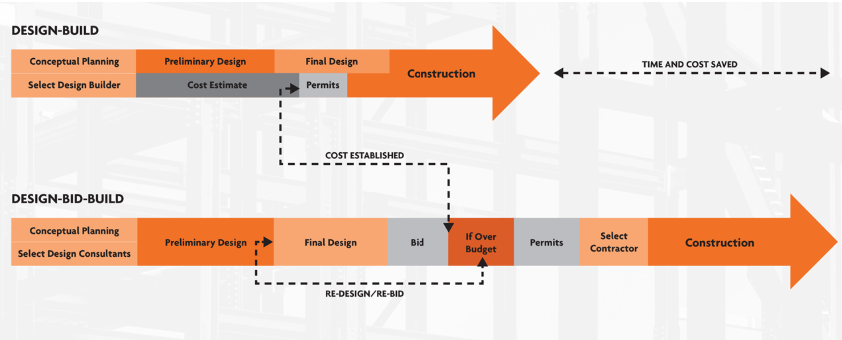
In traditional projects, designs are often completed without detailed cost input from builders. This can lead to tender pricing coming back higher than expected, forcing redesigns or scope reductions.
With design and build, construction expertise is included during the design stage, ensuring:
Real-time cost feedback during design development
Fewer budget surprises at tender stage
Reduced risk of exceeding project budgets
More accurate cost planning from the start
This helps avoid the common scenario where a completed design must be reworked because it exceeds budget expectations.
2. Avoid Expensive Redesigns at Tender Stage
In a traditional design–tender–build model, one of the most costly issues occurs when tender pricing comes in above budget. At this point, businesses are often forced to:
Redesign parts of the project
Reduce scope or quality
Restart the design process
These changes can add significant time delays and additional design fees.
A design and build interior fitout prevents this issue by aligning design and cost from the outset. Because builders are involved during the design process, projects are developed within realistic budget constraints—avoiding costly redesigns later.
3. Faster Project Delivery and Reduced Timeframes
A major benefit of design and build commercial fitouts is faster delivery.
Traditional projects involve multiple separate stages:
Design development
Documentation
Tendering
Contractor selection
Construction
Each stage adds time and potential delays.
Design and build streamlines this process by overlapping design and construction planning, allowing work to progress more efficiently.
Benefits include:
Faster project start to completion
Reduced downtime for businesses
Earlier occupancy and operational use
Fewer delays between project phases
4. Simplified Communication and One Point of Contact
Managing separate designers and builders often leads to communication gaps, misunderstandings, and delays.
A design and build fitout company eliminates this issue by providing one integrated team responsible for the entire project.
This results in:
Clear and consistent communication
Faster decision-making
Fewer errors or misinterpretations
Improved coordination between design and construction teams
For clients, this means less stress and a more straightforward project experience.
5. Practical, Buildable Interior Design
In traditional fitouts, designs are sometimes created without full consideration of construction costs or site limitations. This can result in designs that look great on paper but are expensive or difficult to build.
With a design and build interior fitout, construction expertise is included from the beginning, ensuring:
Designs are practical and buildable
Materials are selected based on cost and availability
Construction methods are considered early
Fewer on-site changes or surprises
This leads to a more efficient and realistic project outcome.
6. Stronger Value Engineering and Cost Efficiency
Design and build allows for continuous value engineering throughout the project, rather than after the design is completed.
This means smarter decisions can be made early, such as:
Selecting cost-effective materials
Simplifying construction details
Optimising space layout
Eliminating unnecessary complexity
The result is a high-quality fitout that maximises value without exceeding budget.
7. One Team, One Contract, One Responsibility
A key advantage of design and build is accountability.
In traditional fitouts, responsibility is split between designers and builders, which can create confusion if issues arise.
With a design and build commercial fitout, there is:
One team responsible for the entire project
One contract for both design and construction
Clear accountability from start to finish
This reduces disputes and ensures smoother project delivery.
Why Businesses Are Choosing Design and Build Fitouts in New Zealand
More businesses are moving towards design and build interior fitout services because it offers:
Greater cost certainty
Reduced risk of redesign at tender stage
Faster project completion
Improved communication and coordination
Better alignment between design intent and construction reality
For offices, retail spaces, hospitality venues, and foodcourts, this approach provides a more reliable and efficient way to deliver high-quality interior environments.
Conclusion: A Smarter Approach to Commercial Interior Fitouts
A design and build fitout model is a more efficient, cost-effective, and practical approach compared to traditional separated design and tender processes.
By integrating design and construction from the outset, businesses benefit from:
Fewer budget surprises
Reduced redesign costs
Faster delivery times
Stronger collaboration
Better overall project outcomes
For any business planning a commercial interior fitout in New Zealand, the design and build approach offers a clear advantage in both cost control and project certainty.
Comments